When we discovered alpacas back in July of 2017, we fell in love with their quirky and lovable personalities. As we dug deeper, we realized the importance alpacas play in the pursuit of sustainability, farm to fashion goods, and climate control.
We couldn't help but dig deep into all aspects of the alpaca industry.
Jason focused on improving fiber characteristics, maximizing fiber usage, and optimizing a collection process for fiber so we could help get as much USA fiber into products. Jason also became the USA expert on color genotyping of alpacas so he could provide education and training to help improve the color consistency and quality of our USA herd.
Rebecca focused on learning about yarn and product creation, while also developing a network of USA and Peruvian artisans to complete our manufacturing and supply chain. Rebecca also published The Alpaca Handbook, which has become the go to guide and benchmark for raising healthy and happy alpacas.
In 2024, we spent two weeks in Peru so we could learn more about the evolution of the alpaca industry and tour production facilities. We were simply amazed at the professionalism, quality control, and culture that was 100% focused on alpacas.
In 2025, we invested virtually everything we had into creating the infrastructure needed to produce alpaca socks right on our farm. We hope to continue this further with additional expenditures to expand to hats, scarves, and other clothing items.
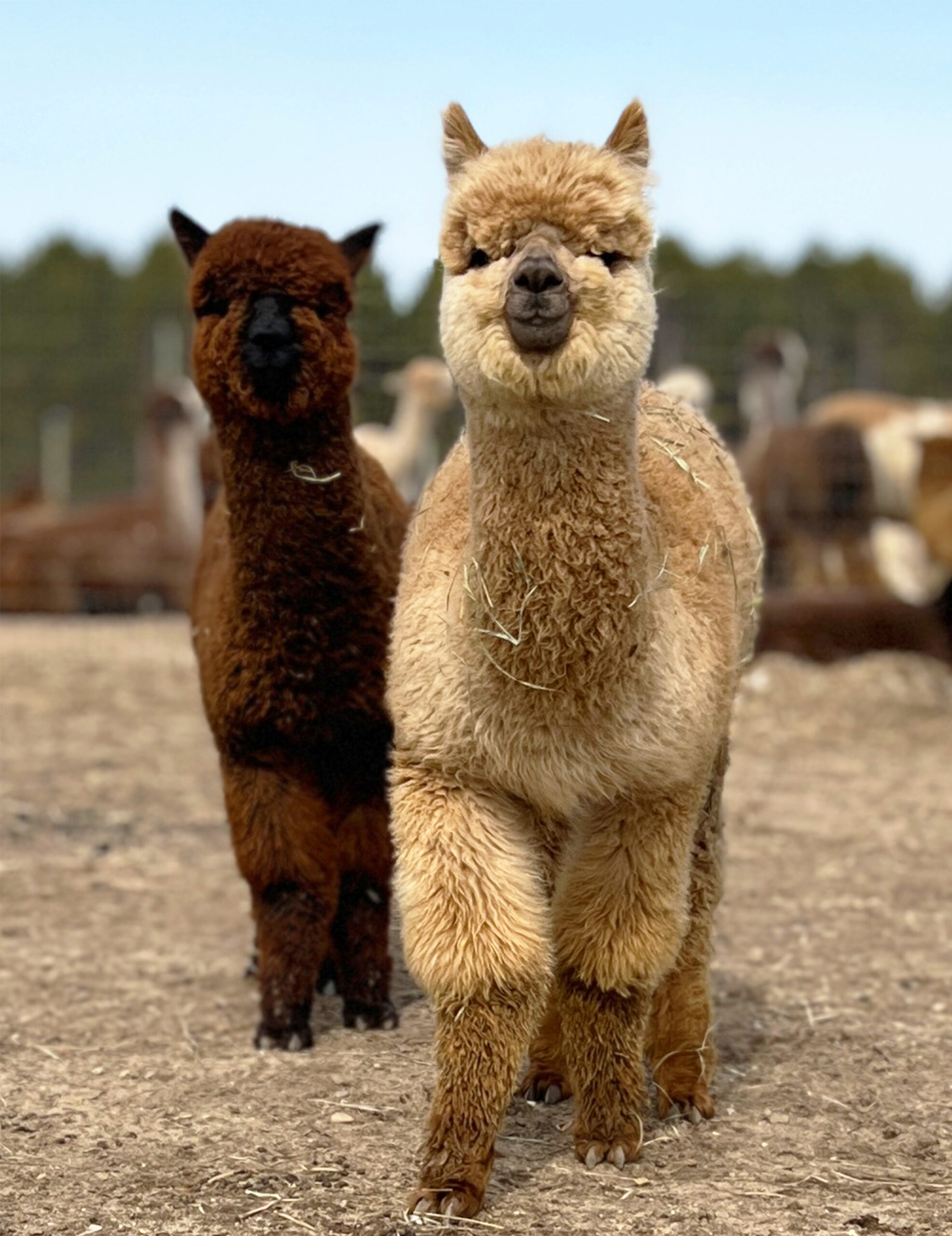
At the heart of our business, Cotton Creek Farms believes and has focused on:
- Creating a family owned and operated business that provides goodness for our customers, local community, and the alpaca industry
- Raising our alpacas in a safe and loving environment
- Maximizing the output and usage of the fiber we harvest each year
- Helping other USA farms utilize their fiber
- Creating small batch goods with complete transparency into the products we sell
- Offering slow fashion (aka buy it for life) items that are timeless in style and beauty
- Focusing on USA-made products whenever possible
- Utilizing thoughtful sourcing from Peru when needed, but doing so with select partners who are Fair Trade certified and uphold international apparel standards
Over the years our business has evolved, and we’d modified our product and service offering to best accommodate our family and these above goals. We’ve realized we cannot be everything to everyone, but we can produce great USA made alpaca products that are as wonderful as the alpacas they originate from.
Why Alpaca Fiber Is the Epitome of Sustainability
We’ll admit sustainability wasn’t on our mind when we had our first alpaca meet and greet. But the more we learned, the more we realized alpacas are a renewable fiber source that is biodegradable and good for the earth.
When you buy an alpaca product, you’re really purchasing a durable clothing item that is grown using limited resources, offers reduced waste, and provides a long-lasting wear. Alpacas are gentle on the earth, they’re highly efficient grazers, they use limited water, and they produce oodles of lovely fiber year after year. And because the fiber doesn’t include lanolin or other grease, cleaning the fiber is safe and gentle.
While alpaca clothing is known most for its soft handle and extreme warmth, it is also strong on performance. Alpaca products regulate temperature naturally, they repel water and stains, they’re odor resistant and highly breathable. The right alpaca products will reduce the need for excessive layering, they’ll provide multi-season wear, and as a result, they will provide less overconsumption than a regular synthetic product.
Our Farm-to-Fashion Philosophy
Cotton Creek Farms was built around the idea of connecting people to the products they purchase and the farms that help produce them.
As much as we would love to make everything within the USA, we cannot. The USA supply chain is fractured when it comes to textiles and manufacturing clothing with natural fibers. This issue started decades ago, and it continues to make producing USA clothing products challenging. But know we're up for that challenge and we're doing everything we can to change it!
Why is this the case?
The USA has limited wash facilities, we have only a few companies willing to spin alpaca fiber, and we have very limited production equipment for creating products. These constraints produce hurdles in some areas and showstoppers in others.
As a result of these issues, our manufacturing process has had to adapt.
For products made on our farm:
- We use fiber from our alpacas.
- We buy fiber from other alpaca farms in the USA.
- We pool this fiber together and have a professional “sorter” group it by color and grade (softness).
- The fiber then will head to our wash house in Canada. We’re on the Canadian border so this is the closest wash house, which helps us limit our carbon footprint.
- Once washed the fiber goes to Midwest micro mills to process the fiber into yarn.
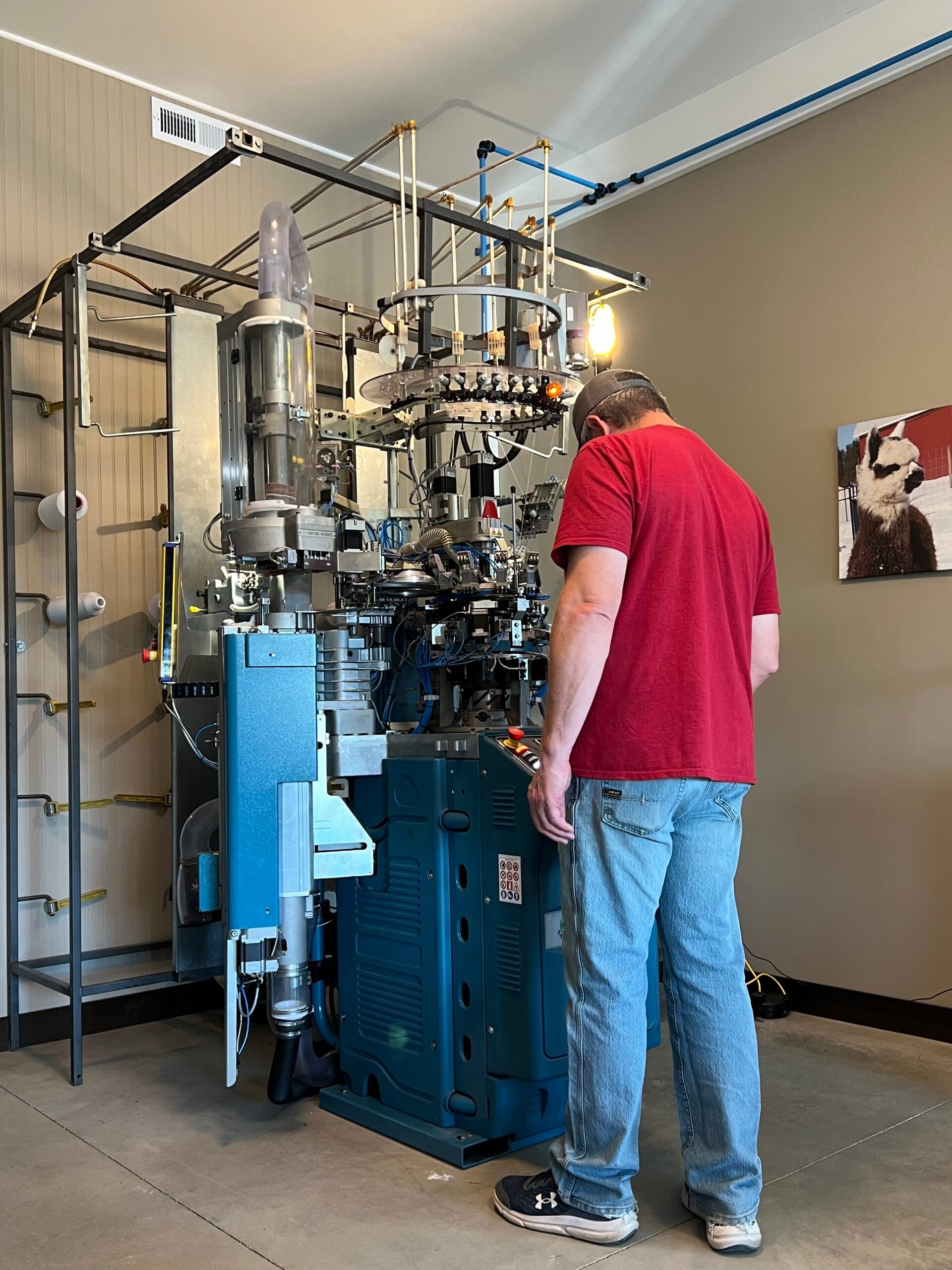
- The yarn then comes back to our farm to be made into socks, hats, scarves, and shawls. Some items we make as a family and some items are handmade by local artisans.
For products made in Peru:
- We’ve established relationships with a few and very select manufacturers in Peru.
- We’ve vetted they hold certifications for OEKO-TEX® Standard 100, Global Organic Textile Standard (GOTS), Peru Fair Trade, Biotrade Peru, Peru Carbon Footprint Certification, and Responsible Alpaca Standard (RAS).
- We’ve toured Peruvian production facilities to validate quality and craftsmanship.
- We select clothing items that are timeless, durable, and provide wear in a variety of conditions.
When you browse our online alpaca store, you’ll notice product details such as:
- Fiber and product origin
- Natural or dyed materials (dyes are AZO free)
- Complete material lists
- Percentages per material
- Weights and dimensions
You will not find another alpaca store that is as transparent and forthcoming with information on who they are, what they do (or don’t do), and what the products are made of.
Our goal is to create products people love to wear, produce products that last season after season, support responsible farming, and doing our part to reduce environmental impact.
Our Commitment to Animal Welfare and Responsible Care
And to us, this isn’t just a business, it is personal. Our alpacas are family and they are treated as such. From hugs and treats to ongoing medical care, we treat the alpaca herd just like we treat our family’s dogs and cats.
Our product labels include photos of our favorite alpacas, and each alpaca has a story as to why we cherish them and hold them dear. That isn’t marketing speak; that’s our way of life.
We maintain a small enough alpaca herd, so everyone gets special attention. We know which alpacas are friends (they do have besties), who is having a bad day, and who needs some extra hugs.

For example, if you visit our farm, we always share facts like:
- Faith loves carrots but doesn’t want to be hugged or even touched. The local 4-H asked us to rescue her, so she is a special case.
- Jalapena longs to be touched and she attempts to sell herself whenever we have visitors. We have to break the news each time that Jalapena is not for sale.
- Nibbler needs lots of attention from her human mom, but her little sister Amara drives her crazy. She also tends to have little tolerance for other alpacas in her space.
- Sherry Ann will be upset if she isn’t treated like a queen and visited often. She may dismiss you, which means she is upset and will need time to get over the transgression. In most cases, the transgression is that human mom didn’t tell her she is pretty every day this week.
- Dolly loves apples and doesn’t like to share. Dolly is pint size, but when it comes to apples, she can create a protective space the size of our entire barn.
- Chase can be jumpy and its only excitement. This dude can be the rockstar of the 4-H obstacle course, but for the life of him, he has ants in his pants for showmanship competitions. It’s just who he is and we love him for it.
- Adel can be a complete snot, but that makes her special. She was one of our first alpacas back in 2017 and she believes she owns the farm.
- Leviticus loves the ladies and all the ladies loves Leviticus. Leviticus also loves human mom, but men not so much.
We know healthy animals are essential to healthy fiber production, but it is also a requirement for us to raise alpacas. Our alpacas are cared for with 24/7 access to shelter, hay, and water. They have proper nutrition and veterinary care. And they get treats whenever human mom brings home carrots and apples.
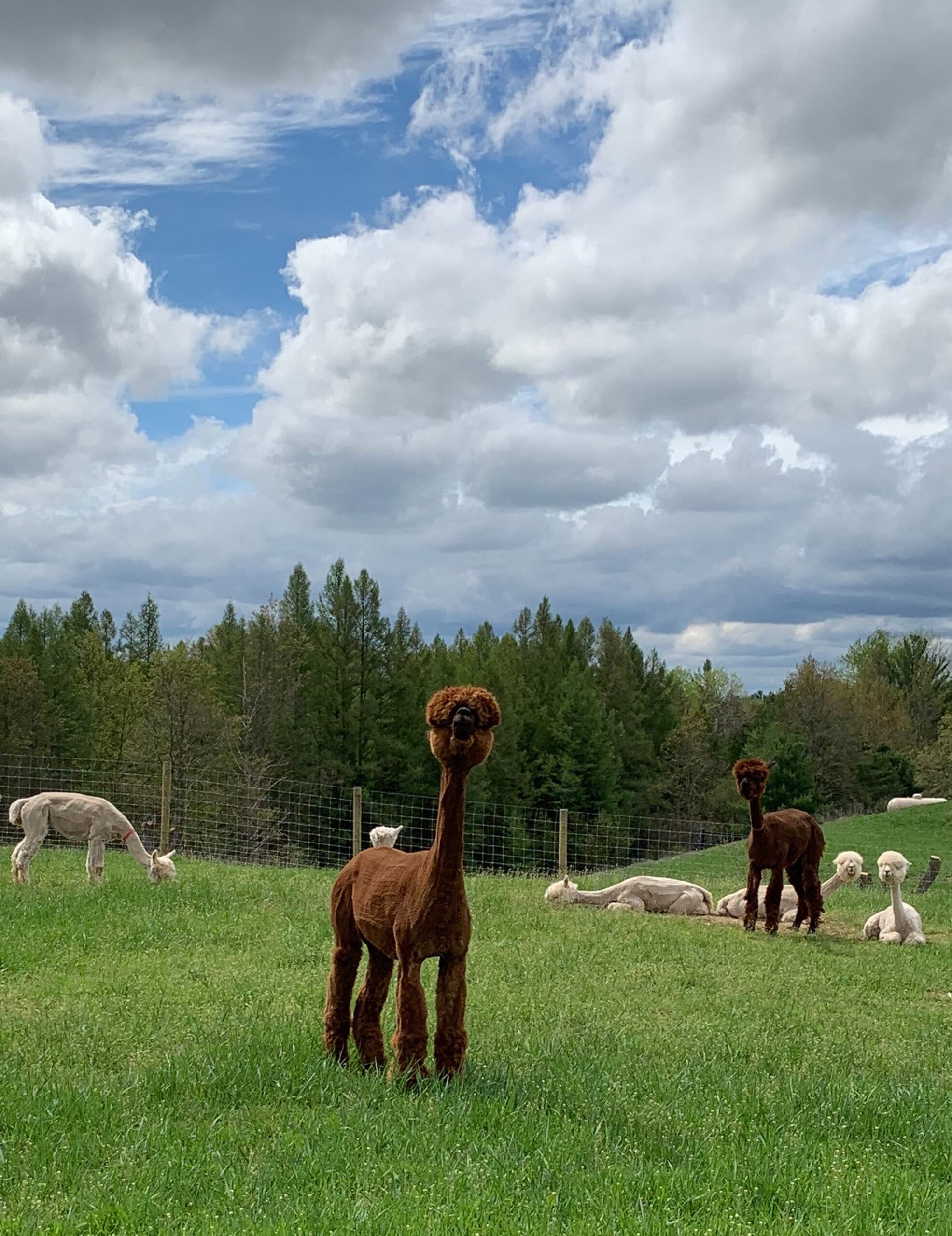
We shear our alpacas each year in May and pay a professional team to travel from Montana to Michigan, so it is done with care and efficiency. This is a family event where Jason coordinates, Hunter is our labor, and Rebecca is emotional support for the alpacas.
Education is also an important part of our mission. In addition to offering alpaca products, we actively share educational resources for alpaca owners in our blog content, national webinars, and Rebecca’s book The Alpaca Handbook.